
Leader in the Era of Physical AI
Opening a New World of 5th-Generation Full Autonomous Driving
with Low-Cost, High-Performance LiDAR
적용 산업

Hyper-LiDAR System for the Real World
Ultra-High-Resolution LiDAR System
Based on Nano-Scan and Hybrid Optical Technology
The Eyes that see the World, A Leader in Ultra High-Resolution LiDAR Technology
Product Overview
Product Overview
Ultra-High-Resolution Hyper-LiDAR System
-
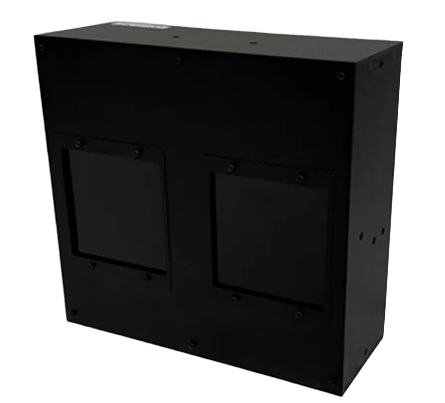
Piezo Actuator-based LiDAR PAL Series
- Side, front, and rear scanning, including road surface condition detection
- Reliable object recognition even in night time and flashlight environments
- High-speed, ultra-high-resolution scanning utilizing atomic-scale
precision technology - Highly reliable LiDAR resistant to engine vibration and off-road conditions
- Stable vertical field of view ensured through hybrid optical design
-
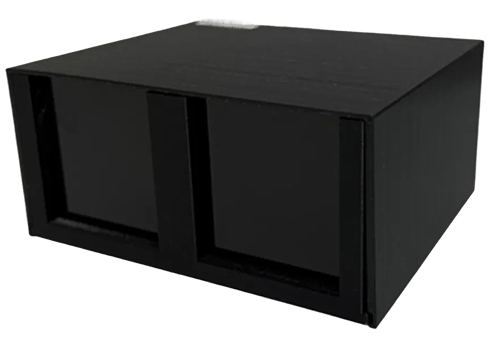
MEMS Actuator-based LiDAR MAL Series
- Side, front, and rear scanning, including road surface condition detection
- Reliable object recognition even in nighttime and flashlight environments
- Compact design and cost efficiency enabled by MEMS scanning technology
- Wide vertical field-of-view scanning through hybrid optical design
- Highly reliable LiDAR resistant to physical stress
적용 산업
Patents & Certifications
Intellectual Property that Proves Our Technological Competitiveness
-

Certificate of R&D Center Designation
-

Venture Company Certification
-

Nanotechnology + Hybrid Optics
-

MEMS + Hybrid Optics
-

Pulse-signal detection & comparison algorithms for Autonomous driving
-

Physical detection data-based autonomous driving algorithms
최신 소식
-
Company News FIX 2025, Global Media Awards – Ubergizmo’s Top 3
FIX 2025, Global Media Awards – Ubergizmo’s Top 3By Eliane Fiolet, on 11/03/2025 17:58 PSTUbergizmo was invited as a media partner for the Future Innovation Tech Expo 2025 (FIX 2025), held from Tuesday, October 21 to Saturday, October 25 in Daegu, South Korea — a city recognized as one of the country’s top robotics and biotechnology hubs. As part of this partnership, Ubergizmo participated in the judging of the FIX Media Awards 2025, a program distinct from the official FIX Innovation Awards 2025 that we also covered during the event.Eliane Fiolet, Co-founer, Ubergizmo, with the Top 3 winners: Wearcom, LCHP Tech and WearcomI was assigned 16 companies to evaluate and meet with during the show, from which I selected my top three. Each participating media outlet conducted a similar evaluation within its own pool of companies, and in total, five other global media partners also selected their top three choices based on their assigned exhibitors. The decision was challenging, as I was genuinely impressed by the sophistication of the technologies and the level of innovation presented across diverse fields. AI, robotics, mobility, and biotech emerged as dominant themes throughout the exhibition.My key selection criteria were Innovation and Technological Uniqueness, Positive Impact on the World, and Industry Potential.FIX Global Media Awards 2025, all winners and judges on stageAmong the companies I evaluated, three stood out for their exceptional creativity, vision, and potential to shape the future of their respective industries — Aetech, WEARCOM INC, and LCHP Tech. Corp.AetechAetech technology descriptionAetech earned its place among the top three for its holistic and highly practical approach to waste management automation. The company’s suite of solutions — the AI-powered waste-sorting robot Atron, the high-efficiency automated recycling platform Airo-MRF, and the compact Multi-tron system — demonstrates a clear vision for scalable, real-world deployment. Aetech stands out for applying advanced computer vision and AI models to handle complex waste streams that traditionally require manual labor, improving both accuracy and throughput. Its modular systems can be easily integrated into municipal and private facilities, including multi-use buildings, addressing one of the biggest barriers to adoption: space and cost constraints. By combining sustainability goals with operational efficiency, Aetech bridges the gap between environmental responsibility and industrial practicality — making its innovation not only technically impressive but also globally relevant in the circular economy movement.WEARCOM INCWEARCOM impressed me for its groundbreaking dry nanocellulose manufacturing technology, which delivers clean, fast, and highly productive powder production while eliminating the need for water or solvents. This fully dry process — rare in the nanocellulose field — reduces energy use, simplifies manufacturing, and opens the door to scalable, eco-friendly material production. While still at the prototype stage, WEARCOM’s first target applications include replacing medical patches and flexible packaging materials, both of which currently rely on plastic. Standard nanocellulose is already recognized for its high mechanical strength and excellent gas-barrier properties, making it a promising sustainable replacement for plastics in food packaging. I selected this company because the packaging industry is urgently seeking sustainable alternatives to plastics —a multi-billion-dollar global opportunity. WEARCOM’s patented technology positions it at the forefront of the bio-based materials movement, blending environmental responsibility with industrial feasibility and setting a strong foundation for future large-scale impact.LCHP Tech. Corp.LCHP captured my attention for developing a low-cost, high-definition LiDAR system that uses the same optical technology found in an atomic force microscope to achieve high resolution at a fraction of today’s typical LiDAR cost. This approach is unique in the LiDAR industry — none of the major players currently use atomic microscope-based optical methods — giving LCHP a clear technological edge. While still at the prototype stage, this innovation tackles one of the most persistent challenges in autonomous driving and robotics: reducing sensor costs without compromising precision. By adapting advanced microscopy principles to LiDAR design, LCHP could make high-quality 3D sensing practical for a wider range of applications, from industrial robots to smaller agricultural or service vehicles. With a patent pending on this distinctive technology, LCHP stands out as a deep-tech pioneer poised to disrupt a field long dominated by incremental improvements rather than fundamental breakthroughs.Honorable MentionIMsystem Pathfinder-Navi-ST prototype, Piaspace MACS, and Quester hand-tracking gloveA few other companies came very close to making the top three. Quester Inc. stood out with its hand-tracking glove, a precise, responsive interface solution for virtual reality, robotics, and motion-control systems, enabling natural, intuitive human–machine interaction. Piaspace Co., Ltd. presented MACS (Multi-modal AI for Camera Solution), an advanced CCTV analytics system that simultaneously processes video and text data using multimodal AI to interpret complex situations and contextual meaning beyond the reach of conventional visual systems. It can be easily integrated into existing CCTV networks via an AI server (SaaS or on-premise), transforming standard surveillance infrastructure into next-generation multimodal AI-powered platforms capable of precise, real-time anomaly detection. IMsystem Co., Ltd. showcased Pathfinder-Navi-ST, a micro medical robot for precision endovascular intervention, and VasculiX, a biomimetic 3D vascular simulation model that enables advanced research and testing. Each of these companies demonstrated remarkable innovation and vision, further highlighting the exceptional diversity and creativity seen at FIX 2025.Like This Article? Get FREE Ubergizmo NotificationsFiled in General. Read more about AI (Artificial Intelligence), Autonomous Driving, Awards, Computer Vision, Fix, Innovation and Robotics.Related PostsWindows 11 Emergency Update Fixes Critical Outlook Crash Bug After January 2026 PatchFIX 2025, Global Media Awards – Ubergizmo’s Top 3AdvertisingiOS 5.0.1 beta appears to have solved the battery drain problemDroid X Gingerbread update fix releasedApple fixing potential iOS security threatAdvertisingMozilla plugs Firefox memory leak issues
-
Industrial Trends Farm robot uses lidar system to navigate autonomously and harvest fruit
My Company |Contact Usdaily coverage of the optics & photonics industry and the markets that it servesFeatured ShowcasesPhotonics West ShowcaseLaser World of Photonics ShowcaseHomeNewsNoticesProductsBuyers GuideJobsEmployersEventsPublicationsAdvertisePrevious Next Table of ContentsApplicationsFarm robot uses lidar system to navigate autonomously and harvest fruit22 Apr 2025Control algorithm shows promise with high-bed cultivation methods.Farm robot using lidar-based control harvesting strawberries.In the farming of strawberries, high-bed cultivation somewhat eases the associated manual labor, but there is now a new lidar-assisted robot solution to to help harvest such soft fruit as strawberries, tomatoes, and other such produce.As a first step, Osaka Metropolitan University Assistant Professor Takuya Fujinaga has developed an algorithm for fruit-picking robots to autonomously drive in two modes: moving to a pre-designated destination; and moving alongside raised cultivation beds.The Graduate School of Engineering researcher experimented with an agricultural robot that utilizes lidar point cloud data to map the environment.Guided by lidar, the farming robot can move accurately while maintaining a constant distance from the cultivation bed, with its effectiveness verified in virtual and actual environments.Precision movement“If robots can move around the farm more precisely, the range of tasks that they can perform automatically will expand, not only for harvesting, but also for monitoring for disease and pruning,” commented Professor Fujinaga.“My research shows the possibility, and once this type of agricultural robot becomes more practical to use, it will make a significant contribution to improving work efficiency and reducing labor, especially for high-bed cultivation,” he said.Professor Fujinaga’s findings are described in Computers and Electronics in Agriculture.Paper abstractFurther details of the Osaka group’s work are contained in the paper’s abstract:“By alternating between the navigation methods – waypoint navigation; and cultivation bed navigation – the robot can achieve self-navigation within a farm without relying on path planning, which requires accurate localization in areas with limited environmental features. The robot uses lidar point cloud data to navigate effectively. The navigation approach was initially simulated in a virtual environment and then evaluated in a real-world strawberry farm.“The results demonstrate the ability of the robot to maintain a specified distance of ± 0.05 m and an orientation angle of ± 5° relative to the cultivation bed. These findings confirm the feasibility of the proposed method for achieving accurate and stable navigation on a farm.“This study also highlights the importance of simulations in agricultural robotics development. Simulated environments provide a cost-effective platform for refining robot specifications, such as sensor selection and navigation algorithms, before real-world deployment. For example, simulations have shown that reducing the maximum measurement range of the lidar can significantly impact localization accuracy and navigation stability.“Future work will focus on creating dynamic simulation environments that replicate real-world conditions, such as uneven surfaces and varying farm layouts. Enhancing simulation fidelity will improve the reliability of evaluations and accelerate the practical implementation of agricultural robots, contributing to their broader adoption and efficiency in farming operations.”More from ApplicationsPW2026: SPIE announces best new products at its 18th annual Prism AwardsLeadoptik announces FDA approval for lung biopsy proceduresKyocera develops meta-lens enabling wavelength-controlled focusingFraunhofers to develop gas chromatograph system to spot bogus food productsAeva and Nvidia to integrate 4D lidar as sensor in the Drive Hyperion Platform...RELATED LINKSAssistant Professor Takuya FujinagaPaper in Computers and Electronics in AgricultureRELATED STORIESFraunhofer smartphone app looks inside objectsMAX-FRESH project sorts fresh fruit and rotting vegetablesOptical test could ensure perfect avocado ripenessVISION 2018 exhibitors to present deep learning technology Latest NewsBusiness NewsApplicationsResearch & DevelopmentPhotonics WorldPress ReleasesProductsBuyers GuideWebinarsWhite PapersProduct FocusVision FocusAR/VR/MR FocusQuantum FocusOptatec FocusShow DailyNewsletterEvents CalendarMy CompanyAdvertisePrivacy PolicyContact Us© 2026 SPIE EuropeTop of Page